

Physician Assistant Institute Graduate
Master of Science in Physician Assistant
MS Master of Science in Physician Assistant
An ARC-PA accredited Master of Science in Physician Assistant, completed in 28 months with a January start, a 98% five-year PANCE pass rate, an on-site cadaver lab, and 1000 hours of patient care experience required at application.
Start here
Advantages of pursuing your degree at UB
The value and demand for PAs in healthcare continue to grow. Since 2011, University of Bridgeport’s PA program has offered the Master of Science in Physician Assistant degree, providing a rigorous and comprehensive PA education.
Complete your degree in 28 months
Classes begin in January.
A patient-centered curriculum
The curriculum emphasizes a patient-centered approach, with coursework dedicated to the care of broad patient populations.
Global health and integrative medicine
Emphasis on global health, integrative medicine, and preventive care.
Small class sizes
Small class sizes that allow you to work closely with experienced faculty.
On-site cadaver lab
An on-site cadaver lab and a high-fidelity, interprofessional simulation center.
Lifestyle medicine pathway
UB’s PA program has been designated by the American College of Lifestyle Medicine (ACLM) as a Partial Academic Pathway. By completing UB’s ACLM-approved course, you can jumpstart your journey toward becoming certified in lifestyle medicine while becoming a PA.
Adiuvare, Mederi, Communiter. To help, To heal, Together.
The mission of the University of Bridgeport Physician Assistant Institute is to prepare future PAs with the knowledge and skills to provide culturally sensitive, patient-centered care and foster life-long learning and professionalism, emphasizing commitments to diversity, global perspective, and integrative approach benefiting all patients.
Program structure
How the 28 months are structured
The PA curriculum requires 113 credits across seven terms, beginning with the didactic phase and moving into the clinical year.
Terms 1 to 3: the didactic foundation
Anatomy and Physiology with labs, Clinical Medicine, History and Physical Exam with lab, Integrative and Lifestyle Medicine, and Global Health and Preventative Medicine. Terms 1 through 3 carry 18, 20, and 19 credits.
Term 4: preparing for the clinical year
Thirteen credits completing the didactic phase and preparing you for supervised clinical practice.
Clinical rotations
Supervised clinical practice across behavioral health, emergency medicine, family medicine, internal medicine, pediatrics, surgery, OB/Gyn, special populations, and an elective.
Term 7: clinical seminar and graduation
Twelve credits closing the program, after which graduates are eligible to sit the Physician Assistant National Certifying Exam.
Course sequences change; the academic catalog and its addendum are authoritative.
See the full course catalogClinical training
Where the clinical year happens
The program has a variety of clinical rotations which expose students to diverse communities and patients.
Nine clerkship areas
Behavioral health, emergency medicine, family medicine, internal medicine, pediatrics, surgery, OB/Gyn, special populations, and an elective.
Underserved communities
The program has set a benchmark of 100% of students completing at least one rotation in an HRSA-designated health profession shortage area or medically underserved area.
Special populations
One additional rotation focused on a special population, including those who are underserved, underrepresented, at-risk, or vulnerable.
Preceptors
Clinical clerkship syllabi and the current preceptor manual are published for preceptors working with UB PA students.
Goals and outcomes
Program goals and how they are measured
University of Bridgeport’s PA Institute has established four goals which support the mission and outcomes of the program. Each goal has defined benchmarks and associated data which demonstrate how they are being met.
Mentorship
Students can work with a mentor in two programs: a peer mentor before matriculating, and an alumni mentor as they approach graduation. The program has set a benchmark of 75% cohort participation in both.
Admission requirements
Admission requirements and deadlines
Admission requirements must be completed at the time of application. Applicants may apply with one prerequisite course in progress if it is completed prior to matriculation.
Program prerequisites
- Bachelor’s degree from a regionally accredited institution
- Overall cumulative GPA of 3.0 or higher
- Overall science GPA of 3.0 or higher
- Anatomy and Physiology with labs: 8 credits, human or mammalian
- Biology with lab: 4 credits
- Chemistry with labs: 8 credits, general or inorganic
- Microbiology: 3 credits, lab not required
- Organic chemistry or biochemistry: 3 credits, lab not required
- Psychology: 3 credits
- Statistics: 3 credits
- 1000 hours of direct patient care experience, completed at the time of application
Required materials, submitted to CASPA
- CASPA application and personal statement
- Official transcripts from all schools attended
- Three letters of recommendation
- Supplemental essays specific to University of Bridgeport
- Detailed and accurate documentation of duties performed during patient care experiences
- Application window closes August 1 at 11:59 p.m. EST, or when the class reaches capacity
- All applications must be verified by CASPA by the August 1 deadline
Student voices
Graduates, in their own words
Interested in exploring life as a UB PA student? See what recent graduates have to say about their experiences.
“I learned so much about medicine, and life overall, during my time as a PA student. Throughout the didactic phase, I gradually built a strong foundation of medical knowledge that I was then able to apply and advance while out on clinical rotations. During my training, one of my professors encouraged my cohort to stop and ask ourselves, ‘If not you, then who?’ when faced with complex cases. This has become one of my favorite mo”
“During my time at UB I was a student working hard, but also a husband and father. I received a quality education and the support from the UB faculty and staff, which enabled me to be successful in my career and a great provider for my family.”
“Working in the Bridgeport area, my patients are both proud and reassured when they find out I completed my PA training at University of Bridgeport. Not only was the didactic education top notch due to the astute professors and expert in-field guest lecturers, but also having access to desired clinical rotations makes University of Bridgeport PA program a sure choice. A statement from one of my professors that has always stuck”
“I chose UB’s PA program because of its mission of culturally sensitive, patient-centered care, which is in every part of our training, from classroom to clinical rotations. UB didn’t just teach me clinical skills; it taught me to treat the whole person: body, mind, and soul. I’m especially grateful for the hands-on simulations, cadaver labs, and impactful coursework. Serving underserved communities, working with veterans, and”
“I am a proud and grateful UB PAI graduate. After finishing my clinical year, I was confident and ready to embark on my career because of the excellent preparation I received at UB. The faculty is dedicated, always going above and beyond to ensure our readiness with a rigorous curriculum and a supportive community. From the cadaver lab and simulation lab to clinical medicine lectures, practicing physical exams and technical ski”
“I chose to earn my master’s degree from the Physician Assistant Institute at UB because it seemed like it really prepared PA students well and set them up for success after school. I especially appreciated that I was able to travel for my clinical rotations, as it gave me a very unique experience that most other schools do not offer. My advice to future PA students at UB is to make sure to study hard but also have fun. PA scho”
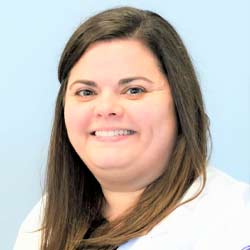
Meet the Physician Assistant Program Director
Thank you for your interest in the PA program at University of Bridgeport.
Our 28-month, ARC-PA-accredited program at University of Bridgeport stands out for its unique approach. We focus on developing fundamental medical knowledge and preparing students for clinical practice, with a special emphasis on global health, integrative medicine, and patient-centered care. Our curriculum equips you with the skills to work in various fields, and our affiliated training sites provide a wide variety of clinical environments for learning and practice.
At University of Bridgeport, we are committed to your education and professional development. Our highly trained faculty, with decades of experience in their fields, provide valuable insights and training. But it is not just about the academics. Our focus on mentorship ensures that you have the support and lasting connections of student, faculty, and alumni mentors as you progress into your career.
We take great pride in the caliber of our curriculum, our students’ dedication, and our graduates’ achievements. Our commitment to providing excellent PA training has made our graduates highly sought-after for employment and residency opportunities.
Lauren Weindling, PA-C, DMSc, CAQ-EM, Program Director
Accredited
Accreditation Review Commission on Education for the Physician Assistant
The Accreditation Review Commission on Education for the Physician Assistant, Inc. (ARC-PA) has granted Accreditation-Continued status to the University of Bridgeport Physician Assistant Program sponsored by University of Bridgeport. Accreditation-Continued is an accreditation status granted when a currently accredited program is in compliance with the ARC-PA Standards. Accreditation remains in effect until the program closes or withdraws from the accreditation process or until accreditation is withdrawn for failure to comply with the Standards. The approximate date for the next validation review of the program by the ARC-PA will be September 2033.
The program’s accreditation history can be viewed on the ARC-PA website at www.arc-pa.org/accreditation-history-university-of-bridgeport.
Common questions
Frequently asked questions
Is the PA program open to international students?
No. This program is not open to international students. Other University of Bridgeport programs are, and the full program list is the place to start.
Do you accept courses taken at community colleges?
Yes. Prerequisites taken at community colleges are acceptable. A rigorous undergraduate career is an important characteristic, so students are encouraged to take multiple challenging courses during their undergraduate years, including upper level science courses, in preparation for the rigors of PA school.
Do you accept online courses?
Online courses may be used to fulfill a prerequisite provided they meet all other requirements associated with that prerequisite.
Do you accept pass/fail grades for courses?
Letter grades are strongly preferred for all courses. Letter grades are required for all prerequisite courses, and pass/fail grades will not be accepted. Applicants who elected pass/fail grading due to the COVID-19 pandemic must submit documentation verifying that the grading change was pandemic-related. In these circumstances, the applicant must also submit a letter from the course instructor, documenting that the student’s average in the course was a “C” or above for the course to be considered a valid prerequisite. What documentation is required if my transcript does not explicitly indicate that a lab component was included in the course title for chemistry, biology, and anatomy and physiology prerequisite courses? If your transcript does not clearly state that laboratory components were included in your prerequisite courses for chemistry, biology, and anatomy and physiology requirement, please submit additional documentation into your application for review. Acceptable forms of documentation include a course syllabus or an official course catalog entry that verifies the inclusion of a lab for each course.
Do you accept PA shadowing hours?
We encourage applicants to shadow PAs, but shadowing hours will not count toward “Patient Care Experience” or “Health Related Experience.” Shadowing hours should be documented in the “Shadowing Experience” section of the CASPA application.
Do you accept graduate level courses for prerequisites?
All of our prerequisites are geared toward an undergraduate program, however some graduate level courses may be substituted in place of an undergraduate prerequisite if it meets all other requirements of the prerequisite, and if the applicant does not have undergraduate courses that match the prerequisites. Graduate level courses are included in the overall cumulative GPA and overall science GPA calculations by CASPA.
My university was on a quarter-credit system. How does this affect my prerequisites?
CASPA uses a standardized conversion ratio to calculate the quarter credit to semester credit equivalency. Applicants must meet the required number of semester credits for each prerequisite. The conversion ratio used by CASPA is: 1.0 quarter hour = 0.667 semester hours. As an example, an applicant would need 6 quarter credits to equal a 4 credit requirement for a prerequisite.
What qualities do you look for in a PA school applicant?
Our most desirable applicants achieve overall GPA and science GPA above the minimum requirements, patient care experience that is high quality and well above the minimum required number of hours, show evidence of a rigorous undergraduate and prerequisite academic career, and have a personal mission that aligns with the mission of our program. Additionally, they have a strong understanding of the PA profession, excellent self-awareness and interpersonal skills, and exhibit evidence of perseverance, passion for, and commitment to their goals.
Are there any recommendations for second-time applicants on how to improve their application?
The Physician Assistant Education Association (PAEA) has developed a CASPA Reapplicant Checklist which can be used to help improve your application for this competitive process.
I received an undergraduate degree from an international institution. Will this count as my bachelor’s degree requirement?
Students who have completed their undergraduate degree internationally must complete a degree evaluation from World Education Services (WES) to determine equivalency to a bachelor’s degree from an accredited institution in the United States. If WES deems the student’s degree equivalent, it will be accepted as the bachelor’s degree requirement. You must complete required prerequisite courses at an accredited institution in the United States. Please note, the course grades in the WES will be included in your overall GPA and overall science GPA using a formula provided by CASPA.
More in health sciences
Start your application
The program commences in January and applications are submitted through CASPA. All pending prerequisites must be successfully completed by December 20.