

Where the sciences meet the humanities
College of Science and Society
Biology and criminal justice. Mathematics and music. Psychology and professional writing. Four divisions that deliberately sit together, because the questions worth asking rarely stay inside one discipline.
What makes this college different
Education is not a mountain to be climbed
It is a process to be experienced — the Dean’s words, and the college’s working philosophy. Interdisciplinary curricula, experiential learning, and faculty who know your name.
Interdisciplinary on purpose
A psychology major can minor in mindfulness studies; a biology student can take film. The divisions share a college precisely so the boundaries stay porous.
Mentoring, not lecturing
Award-winning researchers who are also accomplished teachers, working with students one on one through collaborative research and advising.
Careers in helping professions
Counseling, human services, criminal justice, and psychology prepare students for work where interpersonal skill is the core competency, not a soft extra.
Four divisions
Division of Social and Behavioral Sciences
Prepares students for careers as helping professionals and in any field where strong interpersonal skills decide the outcome — from counseling to criminal justice and human security.
Division of Natural Sciences and Mathematics
Prepares students for careers in the mathematical and life sciences, including pre-medical pathways, with laboratory research alongside faculty.
Division of Arts and Humanities
Prepares students for careers requiring strong writing, communication, performance, and presentation skills — including a full Bachelor of Music.
Division of Modern Languages and the English Language Institute
Supports a set of 18-credit language minors that let students supplement any major and build cultural fluency. The English Language Institute prepares international students for degree study at UB.
College-wide programs
Flexible degrees that draw across divisions, plus the college’s graduate counseling program.
Fourteen minors to sharpen any degree
Minors here are not filler. They are how a psychology student adds mindfulness practice, or a biology student adds pre-medicine — 18 credits that change what your degree can do.
Arts and Humanities
Applied Music, Music Education, English and Professional Writing, Film, Television and Digital Media, Music, Theater Arts.
See the division →Natural Sciences and Mathematics
Biology, Chemistry, Education, Mathematics, Physics, Pre-Medicine.
See the division →Social and Behavioral Sciences
Criminal Justice, Human Services, Mindfulness and Wellness Studies, Multicultural Affairs, Psychology.
See the division →Modern Languages
18-credit language minors that build cultural awareness alongside any major.
About the ELI →Find your entry point
Where are you starting from?
Fifteen programs, four divisions. Here is the short way in.
Right out of high school
Associate and bachelor’s
Psychology, biology, criminal justice, music, and mathematics all admit first-year students — and General Studies exists for people still deciding.
Explore before you commit
Coming from another school
Transfer-friendly degrees
General Studies and the online BS in Criminal Justice are built to absorb prior coursework without losing a year.
Bring your credits
Ready for graduate work
Master’s programs
Clinical Mental Health Counseling, Criminal Justice and Human Security, and Biology at the master’s level.
Move into licensure
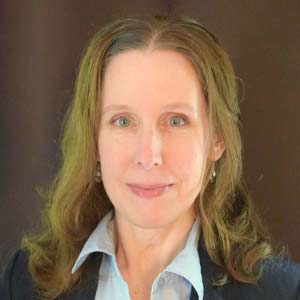
From the Dean
Welcome to the College of Science and Society. This is a place for academic excellence and imaginative new discoveries. It is also a place to develop your critical thinking, your engagement with global and local issues, and your goodwill towards the human community.
Whether you seek expertise in psychology, criminal justice, biology, mathematics, human services, counseling, creative and professional writing, musical performance and education, modern languages, and more, our programs will match your educational and career goals.
Our faculty are award-winning researchers and accomplished teachers with a dedicated commitment to help you achieve your goals for college, graduate training, or professional development. We hope to instill in you the same passion for life-long learning that we all feel — through collaborative research, experiential learning, and one-on-one mentoring and advising.
And remember that education is not a mountain to be climbed; it is a process to be experienced. At University of Bridgeport we are proud to help you along the way.
Sincerely,
Amy Nawrocki
Dean, College of Science and Society
Ask better questions here
Small classes, faculty who mentor rather than lecture, and a college built so the sciences and the humanities stay in the same conversation.