

School of Nursing Undergraduate
BSN Nursing Program
BSN Bachelor of Science in Nursing
A CCNE-accredited Bachelor of Science in Nursing with clinical placement and a simulation center, leading to NCLEX eligibility and RN licensure.
Start here
Three paths into the BSN
The prerequisites are the same for every student. What differs is where you begin them. Each card below explains what your path would look like.
Route 01
You are coming straight from high school
You know you want to become a nurse, and you are ready to begin. You need the science prerequisites and a clear path into clinical coursework.
You take prerequisites in your first three semesters and begin Nursing coursework in the second semester of sophomore year. Clinical placement follows, with laboratory and simulation throughout.
Route 02
You are transferring with science credits behind you
You have Anatomy and Physiology, Chemistry, Microbiology or Statistics from another institution and want to know what transfers and what you would repeat.
Prerequisites must have been completed within seven years. Bring transcripts to an admissions officer early: that conversation determines your start term more than anything else on this page.
Route 03
You are an RN returning for the bachelor’s
You hold an associate degree, you have been working, and you want the BSN without pretending you are a beginner.
Your experience counts. As one of our graduates put it, she wanted “a program that would allow me to work and use my experience to enhance my learning”, and found the coursework relevant to current practice.
The Nursing Skills and Simulation Center
Before a real patient, a simulated one. You practice on high-fidelity manikins in a room built to behave like a ward, with the session recorded so you can watch your own hands afterward.
Equipment you will use
Inside the Simulation Center
The following equipment is available in the School of Nursing’s Simulation Center.
Patient simulators
The Laerdal Sim View system with Sim Man 3G and Sim Mom, plus Nursing Anne, Nursing Kelly and Nursing Kid on Sim Pad.
Community Health Room
A room set up as a patient’s home, for practicing care in a setting where equipment is limited.
Debriefing Room
Computer control room, two-way mirrors and video recording, so a session can be replayed and picked apart.
Pyxis machine and console
The dispensing cabinet you will meet on your first shift, so you meet it here first.
Welch Allyn diagnostic wall units
Wall-mounted diagnostic stations, as fitted in an examination room.
Theatre-style lecture hall
For the part of nursing education that is still a lecture.
Admission requirements
Admission requirements
A cumulative GPA of 3.0, the TEAS test, and the prerequisite science sequence completed within the last seven years.
What you submit
- Completed University of Bridgeport application
- School of Nursing supplemental application
- Cumulative GPA of 3.0 or higher
- Transcripts from every college or university attended
- Proof of high school completion or equivalent
- Personal statement
- TEAS test result
- Two recommender forms
Prerequisites, within seven years
- BIOL 113 / 113L — Anatomy and Physiology I with lab (4)
- BIOL 114 / 114L — Anatomy and Physiology II with lab (4)
- CHEM 113 / 113L — Introductory Chemistry with lab (4)
- Microbiology (4)
- MATH 103 — Introduction to College Algebra (3)
- MATH 203 — Elementary Statistics (3)
- PSYC 103 — Introduction to Psychology (3)
- PSYC 205 — Lifespan Developmental Psychology (3)
- SOC 101 — Principles of Sociology (3)
- ENGL 101 — Academic Writing (3)
- Fundamentals of Nutrition (3)
- Fine Arts (3) · Humanities (3)
- Freshman Seminar or Liberal Arts elective (3)
Program structure
Prerequisites first, then clinical coursework
Nursing coursework begins in the second semester of your sophomore year. The semesters before that build the science foundation it requires.
Years one to two: the sciences
Anatomy and Physiology, Chemistry, Microbiology, Statistics, Psychology and Sociology: the prerequisite sequence, completed with a 3.0.
Sophomore, second semester: Nursing begins
Your first Nursing coursework, taught alongside laboratory and simulation rather than after it.
Clinical placement
Hospitals, schools, medical offices and community settings. Every placement includes laboratory and simulation experience.
Graduation, then NCLEX
The BSN makes you eligible for the National Council Licensure Examination. Passing it makes you a registered nurse.
Course sequences change; the academic catalog and its addendum are authoritative.
See the full course catalogCareer outcomes
Where the BSN degree can take you
University of Bridgeport BSN graduates pursue roles such as these.
Quality and case management
Quality assurance and improvement coordination, and case management nursing, are both on the same list: the roles where a BSN’s systems training shows.
Student voices
Graduates, in their own words
“Obtaining my BSN at UB increased my confidence in my skills and opened doors to exciting new opportunities that I wasn’t even looking for before UB.”

“During my time in UB’s BSN program, I’ve learned so much about myself. I’ve made lifelong friends and have met many mentors along the way.”
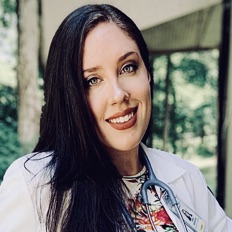
“University of Bridgeport has allowed me to follow my dreams of becoming a first-generation college student on the path to becoming a nurse.”
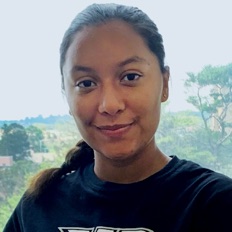
“One thing to remember is human touch is still essential in nursing care — something I learned at UB and still abide by.”
Accredited
Commission on Collegiate Nursing Education
The baccalaureate degree program in nursing at University of Bridgeport is accredited by the Commission on Collegiate Nursing Education, 655 K Street NW, Suite 750, Washington, DC 20001, 202-887-6791.
Accreditation status is maintained by the School of Nursing; the CCNE directory is authoritative.
Common questions
Frequently asked questions
Is the BSN open to international students?
No. This program is not open to international students. Other University of Bridgeport programs are. The full program list is the place to start, and an admissions officer can point you at the ones that fit.
When do I start actual Nursing courses?
The second semester of your sophomore year. The first three semesters are the prerequisite sciences, which have to be complete before clinical coursework begins.
How old can my prerequisite credits be?
Seven years. Prerequisites completed longer ago than that need to be retaken: bring your transcripts to admissions early, because this is the single thing most likely to change your start term.
What is the TEAS test?
The Test of Essential Academic Skills, a standardized entrance test for nursing programs covering reading, mathematics, science and English. A result is required as part of your application.
Does the degree make me a registered nurse?
It makes you eligible to sit the National Council Licensure Examination (NCLEX). Passing the NCLEX is what licenses you as a registered nurse.
Where do clinical placements happen?
Hospitals, schools, medical offices and community settings. Every placement includes laboratory and simulation experience alongside the clinical hours.
What GPA do I need?
A cumulative 3.0 or higher, alongside the TEAS result, two recommender forms and a personal statement.
More in health sciences
Start your application
Applications are accepted on a rolling basis and financial aid is available. Admissions can walk you through prerequisites, transfer credit and the TEAS.